




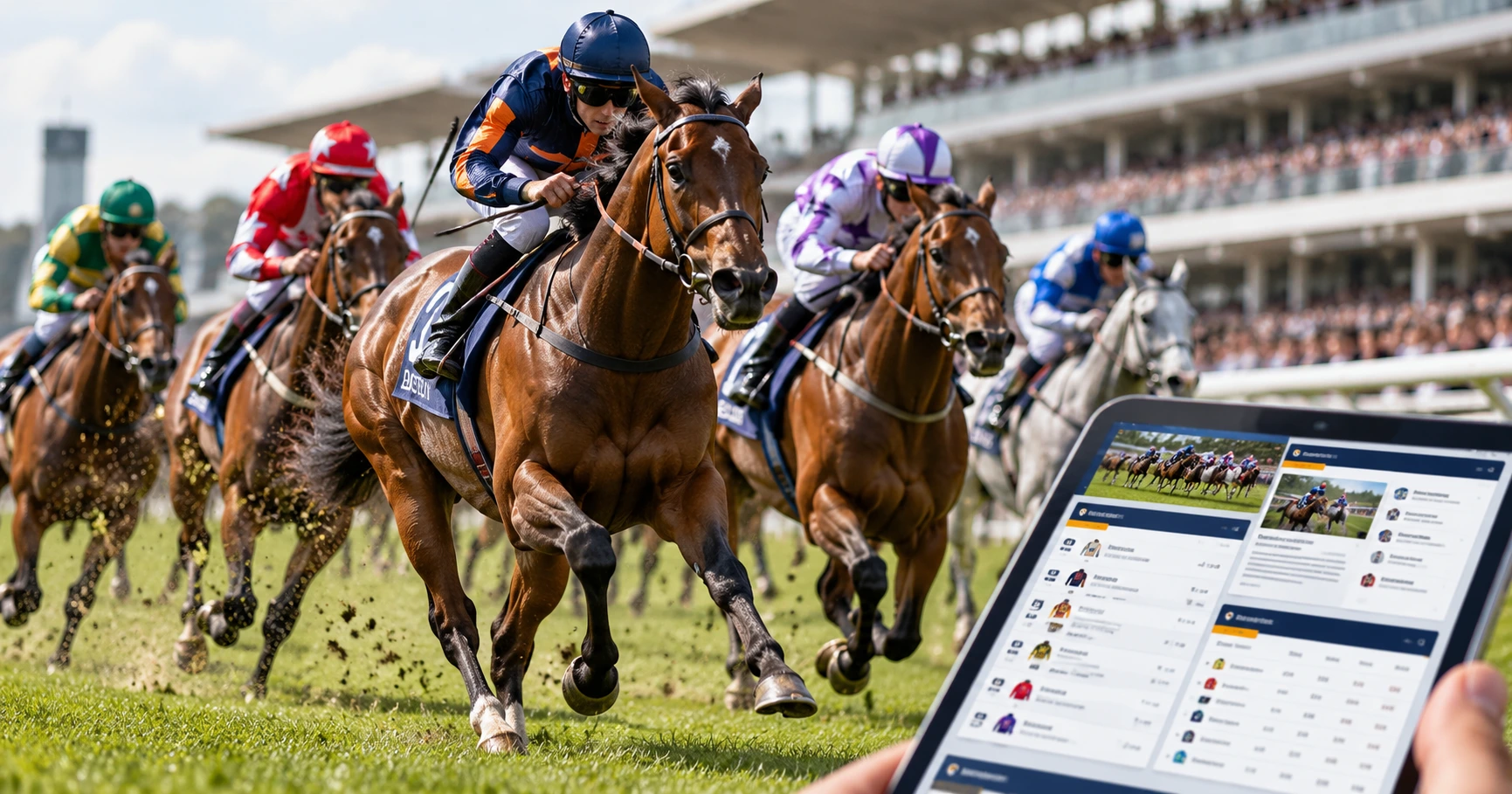
Horse racing fans often lose time switching between websites to check racing news, race cards, and results. RaceBuzz is a horse racing portal that brings race cards, live results, news, schedules, trackwork updates, odds, and expert tips together in one place. On a single day, it can cover meetings from Windsor and Ripon in Britain, Naas in Ireland, Vichy and Clairefontaine in France, and Hyderabad in India. Each race card provides details such as race times, distances, classes, prize money, and declared runners. Understanding these details helps you assess field size, race conditions, and the level of competition. This guide explains how to use RaceBuzz to follow racing meetings, interpret race cards, review results, and research racing tips more effectively.
Racebuzz Racing Guide Overview
Racebuzz helps racing followers track developments, locate upcoming meetings, examine race cards, and compare runners using details such as form, ratings, jockeys, trainers, weights, and race conditions. Its tips provide an additional perspective rather than a guaranteed prediction, while results allow post-race comparison of expectations with actual outcomes. Using these sections in sequence creates a practical approach to researching races, following horses, and reviewing performances.
Get the Latest Horse Racing News
Before searching for a specific race, understand the latest race developments across the wider racing scene. At Racebuzz, the Tidbits section provides you with updates and different information on horse racing, including Indian and international racing.
The latest information includes upcoming race events, horse performance, trainers, jockeys, results, and other important news. You can use these updates for more detailed race research when a particular horse, trainer, or meeting interests you.
On the other hand, the image and video tidbits cover race winners, winning horses, trainer updates, and highlights from racing meetings. This way, you get key racing stories in a quick update format.
Explore the latest news and updates from the horse events you follow.
Race Cards – Find Race Details Before the Event
Race Calendar
Start with the Racing Calendar on Racebuzz, where racing events are arranged by date, month, and year. Once you have selected your meeting, choose your particular race and explore available information, such as relevant race cards, runners, etc.
Race Card
A race card allows you to get useful insights about runners entered for a particular race and review the available details before the race starts. It includes:
| COLUMN | MEANING | HOW TO USE IT |
|---|---|---|
| POS | Finishing position (1, 2, 3…). | Shows who won and who placed. |
| CARD NO. | The horse’s number on the race card (saddlecloth). | Matches the runner to the programme and the draw. |
| DR | Draw, the starting stall or gate number. | Matters on courses where inside or outside stalls have an edge. |
| JERSEY | The jockey’s silks (colours). | Helps you spot the horse on the track. |
| MARGIN | Distance behind the horse in front, or behind the winner. | Shows how close the race was, for example a head, a neck or lengths. |
| HORSE | The horse’s name. | Identifies the runner. |
| RATING | The handicap rating given to the horse. | A higher rating means the handicapper thinks the horse is better. Compare it with the rest of the field. |
| JOCKEY | The rider. | Check the rider’s form and whether the rider has changed. |
| WT | Weight carried, usually in kg in India. | A heavier weight is a bigger burden. Compare it with the rating. |
| TRAINER | The trainer. | Check the trainer’s strike rate. |
| TIMING | The winning or finishing time. | Compare it with other races over the same distance. |
| ODD | The odds or final price. | A shorter price means the market favoured the horse. |
| AL | Allowance given to the horse or jockey, usually as a weight reduction. | Shows whether an apprentice or other eligible rider has received a weight allowance. |
| SH | Shoeing information showing the horse’s shoeing status or equipment. | Helps identify any change in the horse’s shoeing setup, which may be relevant when comparing its performance. |
Additional Details
Tote Dividends: The amount paid for a winning selection through the pooled system, which is calculated after the race. Less common winning combinations may pay more, and each pool has its own different dividends, like Win, Place, Exacta, and Trifecta.
Reward Allocation: The prize money given to the horses that have top positions. The winners receive a larger share while other placed horses get smaller shares. Owners, trainers, and jockeys are also paid from it.
Race Time and Distance: Distance shows race length in meters or furlongs. Race time shows how long the winner takes to finish. Comparing time is most important when races are on the same distance and on similar tracks.
Check Race Results After the Event
Post-race review allows you to see performance and compare the outcome with what you expected before.
Racebuzz’s results section is an overview of completed races. You get to know finishing positions, horses, trainers, jockeys, timings, weights, etc.
Examine the complete result rather than just checking only the winner’s result. If your considered horse performed poorly, then look for where it finished and compare overall results with the factors you calculated before the race. Similarly, when a horse gives an impressive performance, review its previous results, especially going into its next run.
Check Racebuzz Tips Before The Race
Racebuzz tips go beyond following the odds. Its tipsters study each meeting closely and weigh form, draw, track conditions and stable trends. They then flag the horses worth backing and the races with the most value for punters. Reading these tips before the first race gives you time to compare views and shortlist selections. It also helps you spot where the value lies.
However, take a tip as an additional part of the information rather than a guaranteed prediction. Consider your reason after selecting a horse and compare it with others. The goal is to understand why a particular runner has been highlighted and how you can use this information to make a more informed decision about the race.
Use Racebuzz Before and After Each Race
Racebuzz provides you with complete information before, during, or after a race. You can simply follow the information in a natural sequence rather than checking each feature separately:
- Step 1: Begin with Tidbits for the latest racing news, stories, and more useful context
- Step 2: Use Racing Calendar to identify the meeting and race you want to explore
- Step 3: Get the race card after selecting your particular race to review the available information about the runners and conditions
- Step 4: Look at the tips to see available additional opinions or insights for the race
- Step 5: Check the results once the match is complete, and compare them with the information you reviewed earlier
This way, you can use Racebuzz more easily, as every feature provides different information, like what is happening. When and where is the race? Who is running? What are the useful tips? And what was the final result?
Conclusion
If you are someone who follows horse racing regularly, having the right information can make all the difference. With Racebuzz, it is easier to stay engaged, informed, and prepared for upcoming racing.
RaceBuzz provides a convenient starting point to explore whenever it catches your attention
Quick Answers About RaceBuzz Horse Racing
Can I use RaceBuzz to follow a particular horse?
Yes, you can follow a particular when appearing in relevant news, race cards, tips, and results. Review the available information to check its racing activity and performance across different events.
Why might a racing follower use both news and race information?
Each type of information has its own value. Where news helps you understand what is happening around the sport, while race information focuses more on runners and conditions of a particular event. Considering both types of information gives a broad picture without relying entirely on one side story.
What do the numbers next to a horse’s name mean in racing?
These are the finishing positions of horses in previous races, providing easy access to recent performance and track racing record at a glance.
How does race class affect a horse’s performance?
Race class helps you showcase a level of competition. This is more useful when you consider the quality of horses the runner competed against.
What Do C and D Stand For on a Horse Racing Card?
The C symbol displays a previous win at the course, while D explains a win over the same distance. It helps you identify a horse’s relevant past experience.