






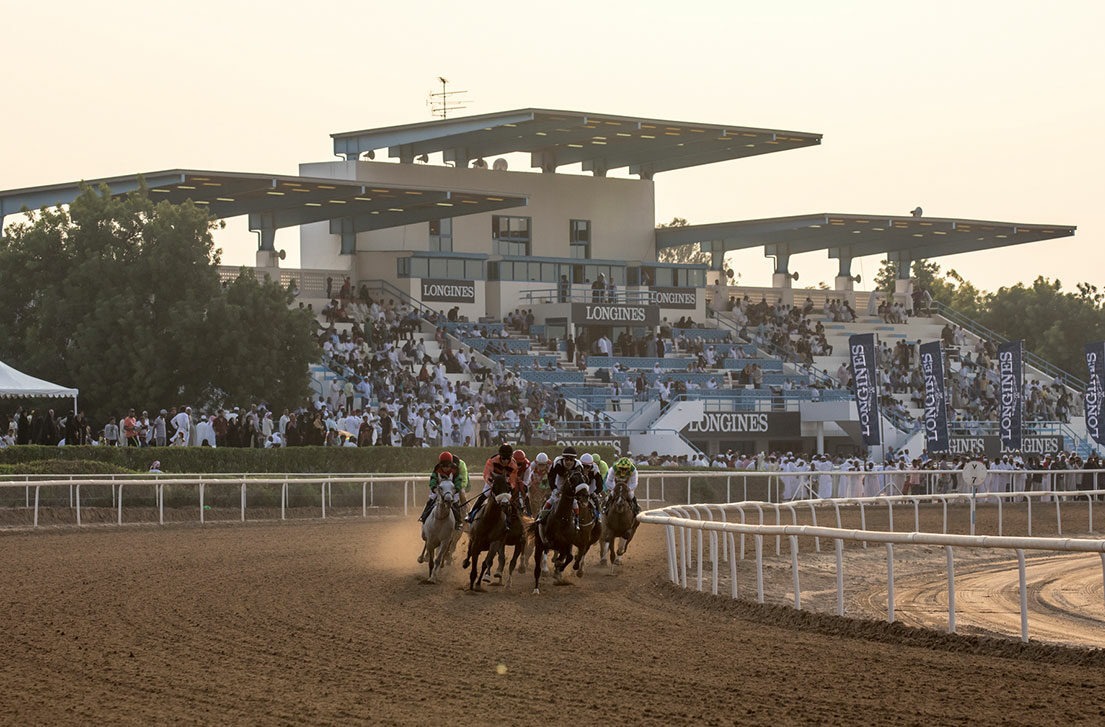
Sharjah Racecourse will stage a six-race Purebred Arabian meeting on Sunday, 25 October 2026, with UAE-bred horses set to feature across a varied programme of maiden and handicap contests. The Sharjah race meeting will run from 14:30 to 17:00, with races scheduled at 30-minute intervals over distances ranging from 1,000 to 2,000 metres. Each contest will carry AED 50,000 in prize money, taking the total advertised prize fund to AED 300,000.
The programme will feature races for different age groups and handicap ratings, beginning with a 1,200-metre maiden before moving through sprint and middle-distance contests. The final race will cover 2,000 metres, providing a longer-distance test to conclude the afternoon.
The opening contest, the Sharjah Municipality Race, will begin at 14:30 over 1,200 metres. It will be a maiden for four-year-old and older Purebred Arabians bred in the United Arab Emirates. The opening race will give eligible horses an opportunity to compete over a sprint distance as the six-race programme gets underway.
At 15:00, the Sharjah Public Works Department Race will follow over the same 1,200-metre distance. The handicap will be open to four-year-old and older UAE-bred Purebred Arabians with ratings from 0 to 75. Its rating restriction will distinguish it from the opening maiden and provide the first handicap contest of the meeting.
The third race, the Maliha Municipality Race, will take place at 15:30 over 1,000 metres. Restricted to three-year-old UAE-bred Purebred Arabians, the maiden contest will be the shortest race on the card. Its age restriction will set it apart from the first two races, which will be open to older horses.
Sharjah Race Meeting to Feature a Varied Range of Handicap Contests
The programme will move to a longer distance at 16:00 with the Sharjah Electricity, Water and Gas Authority Race, which will cover 1,700 metres. The handicap will be open to four-year-old and older UAE-bred Purebred Arabians rated between 0 and 65. It will introduce a different combination of distance and rating conditions after the opening three races.
The fifth contest, the Sharjah Sports Council Race, will begin at 16:30, also over 1,700 metres. Open to four-year-old and older Purebred Arabians, it will carry a handicap rating condition of 0–90. Although the distance will remain unchanged from the preceding race, the higher rating ceiling will create a different eligibility profile for the field.
The meeting will conclude at 17:00 with the Al Dhaid Cultural & Sports Club Race, a 2,000-metre handicap for four-year-old and older Purebred Arabians. It will be the longest contest of the afternoon and will bring the six-race programme to a close. The longer distance will provide a different test from the sprint and middle-distance races scheduled earlier in the day.
All six races will carry AED 50,000 in prize money. The programme will comprise two maiden contests and four handicaps, with the races covering distances of 1,000, 1,200, 1,700 and 2,000 metres. The combination of age restrictions, handicap ratings and race distances will give the meeting a varied structure while maintaining its focus on Purebred Arabian racing.
With its first race scheduled for 14:30 and the final contest set for 17:00, the meeting will offer a continuous afternoon of racing at Sharjah Racecourse. The programme will place UAE-bred Arabians at the centre of all six contests, from the opening 1,200-metre maiden to the closing 2,000-metre handicap.
The Sharjah race meeting on Sunday, 25 October 2026, will feature six Purebred Arabian races from 14:30 to 17:00. The card will include two maiden contests and four handicaps for UAE-bred horses, with distances ranging from 1,000 to 2,000 metres and AED 50,000 in prize money for each race.
For more stories, results, and updates from the world of horse racing, stay tuned to RaceBuzz.