




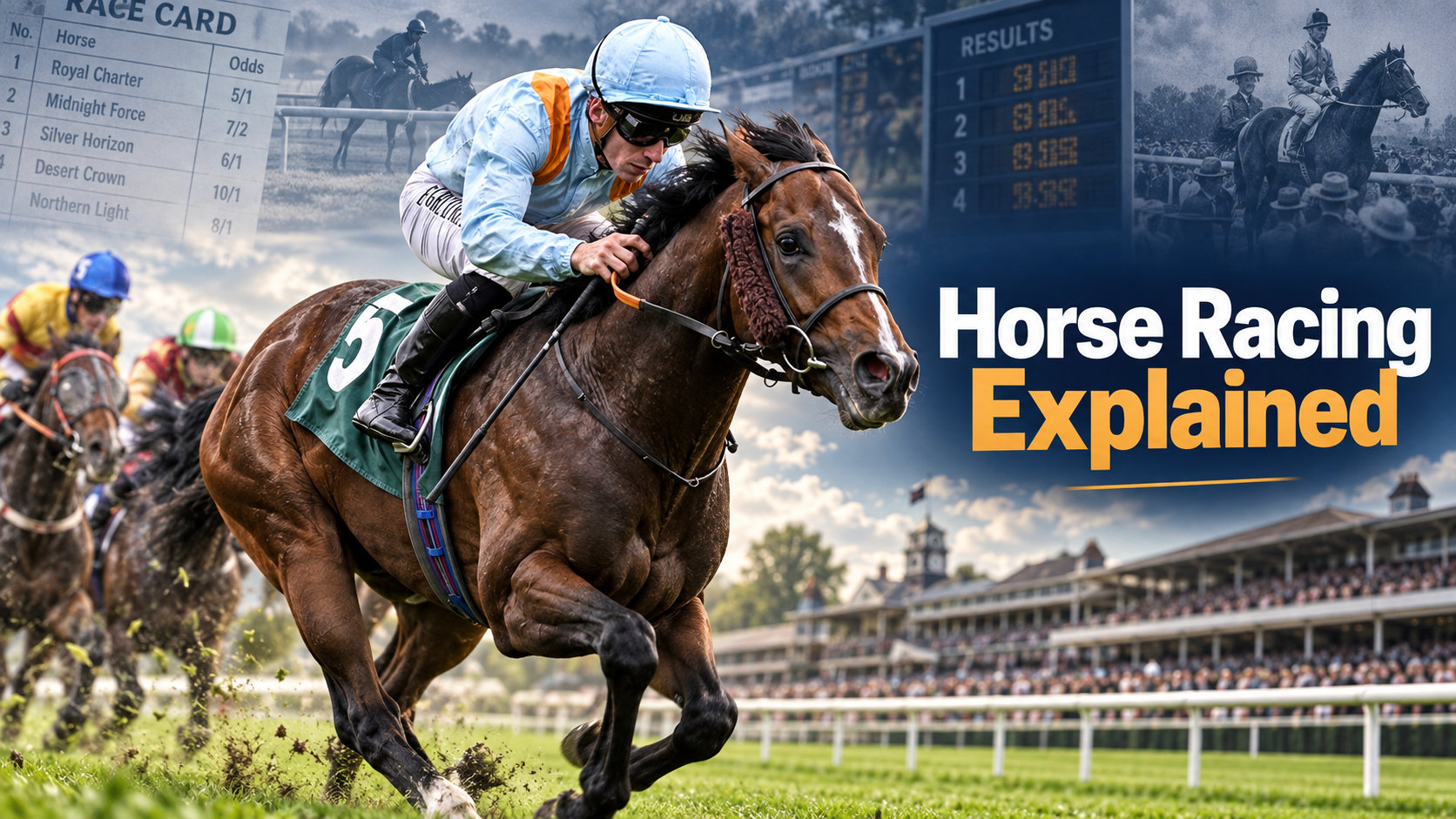
Horse racing is a historic and highly organised sport that brings together horse breeding, professional training, jockey expertise, and regulated competition. Over centuries, horse racing has evolved into a structured industry supported by official records, experienced professionals, and established racing practices. With all these technicalities, understanding how the sport works becomes vital. This involves knowing how race cards provide essential information, how trackwork reflects a horse’s preparation, and how turf clubs maintain racing standards.
To help answer these queries of yours, this guide explores the key aspects that define modern horse racing and its enduring global appeal.
Key Takeaways
|
What a Horse Racing Information Platform Is and How to Use It
A horse racing information platform is an online hub that provides racecards, results, racing calendars, horse, jockey, and trainer profiles, expert insights, and latest racing news. It helps enthusiasts follow races, analyse performances, compare statistics, and stay informed about upcoming horse racing events.
What Horse Racing Updates Site Covers and How the Portal Is Organised
A horse racing updates site organises news, race cards, results, trackwork, and expert analysis into dedicated sections for easier navigation. Indian coverage focuses on domestic turf clubs, race meetings, and local racing developments. In contrast, international coverage highlights global racing calendars, major championships, leading racecourses, and worldwide industry news, allowing enthusiasts to follow both circuits efficiently.
How Horse Racing Works: A Beginner’s Introduction
Horse racing combines athletic competition, structured rules, and long-standing traditions. The following sections explain the key elements that help beginners understand how the sport is organised and enjoyed.
What is Horse Racing and Why Is It Called the Sport of Kings
Horse racing is a competitive sport where thoroughbreds race over predetermined distances under official rules. It earned the title “Sport of Kings” because of its historic patronage by royalty and nobility, whose support helped establish organised racing, thoroughbred breeding, and prestigious racing traditions worldwide.
Race Day Is Structured From First Race to Last
A race day follows a planned schedule featuring multiple races, each conducted according to official timings and conditions. Horses are inspected before competing, presented to spectators, and prepared between races, ensuring every event runs efficiently from the opening contest to the final race.
Different Race Classes Mean in Indian and International Racing
Race classes group horses according to their ability, experience, or official ratings, creating balanced competition. Indian racing mainly follows a rating-based class system, while international racing also includes maiden, handicap, listed, and Group or Grade races that reflect different competition levels.
How Prize Money, Ownership, and Racing Calendars Work Together
Prize money rewards successful performances, while owners determine a horse’s racing programme throughout the season. Combined with structured racing calendars, these elements influence where horses compete, support long-term career planning, and help maintain an organised and competitive horse racing industry.
Indian Horse Racing — Tracks, Clubs, and Seasons
India’s horse racing is governed by established turf clubs that oversee race meetings, enforce regulations, maintain racing standards, and organise seasonal calendars across major racecourses, ensuring the sport operates with fairness, consistency, and recognised authority nationwide.
How India’s Turf Clubs Govern and Organise Horse Racing
India’s recognised turf clubs regulate horse racing by overseeing race meetings, licensing participants, maintaining racing standards, publishing official calendars, and ensuring races are conducted under established rules across the country.
Royal Western India Turf Club (RWITC)
Responsible for racing in Mumbai and Pune, this club oversees some of India’s most prominent race meetings and premier competitions. It manages licensing, racing regulations, and racecourse operations while setting high governance standards, making it one of the country’s most influential racing authorities.
Royal Calcutta Turf Club (RCTC)
Founded in 1847, this club is recognised for its deep historical significance in Indian horse racing. It helped establish organised racing in the country and continues to preserve its heritage by administering race meetings, supporting thoroughbred racing, and maintaining long-standing traditions in eastern India.
Bangalore and Mysore Turf Clubs
These clubs strengthen horse racing in Karnataka by hosting racing seasons that complement one another throughout the year. Their combined efforts provide a continuous racing programme, encourage regional participation, and contribute to the development of competitive thoroughbred racing in South India.
How Indian Racing Seasons and Venues Work Through the Year
Seasonal meetings across major racecourses shape India’s racing calendar. Here’s how each venue and event contributes to the season.
Racing Calendar Across Mumbai, Pune, and Kolkata
India’s racing calendar shifts between major venues as the seasons change. Mumbai traditionally hosts the winter racing season before the action moves to Pune during the monsoon months under the Royal Western India Turf Club. In eastern India, Kolkata conducts its own seasonal meetings, ensuring that racing continues across different regions with well-planned fixtures and feature races.
The Role of the Monsoon in Mumbai and Pune Racing
Weather plays an important role in determining when races are held. While Mumbai’s racing season concludes before heavy rainfall arrives, Pune becomes the primary venue during the monsoon, offering a dedicated racing programme that keeps the sport active. This seasonal transition allows race meetings to continue safely while maintaining suitable track conditions for horses and jockeys.
Bangalore’s Distinct Racing Season
Unlike many racing centres, Bangalore is known for hosting both summer and winter racing programmes, giving it one of the most active calendars in Indian horse racing. Its schedule includes several prestigious graded races and attracts leading horses, trainers, and jockeys, making the city an important destination on the national racing circuit.
India’s Classic Racing Series
The Indian racing season reaches its peak through prestigious Classic races, including the Guineas, Oaks, Derby, and St. Leger. Reserved for the country’s finest thoroughbreds, these races are conducted at different racing centres throughout the season and represent the highest level of competition, tradition, and achievement in Indian horse racing.
Discover every upcoming race, from major Classics to seasonal fixtures, and never miss the action on India’s racing circuit.
How to Read a Race Card
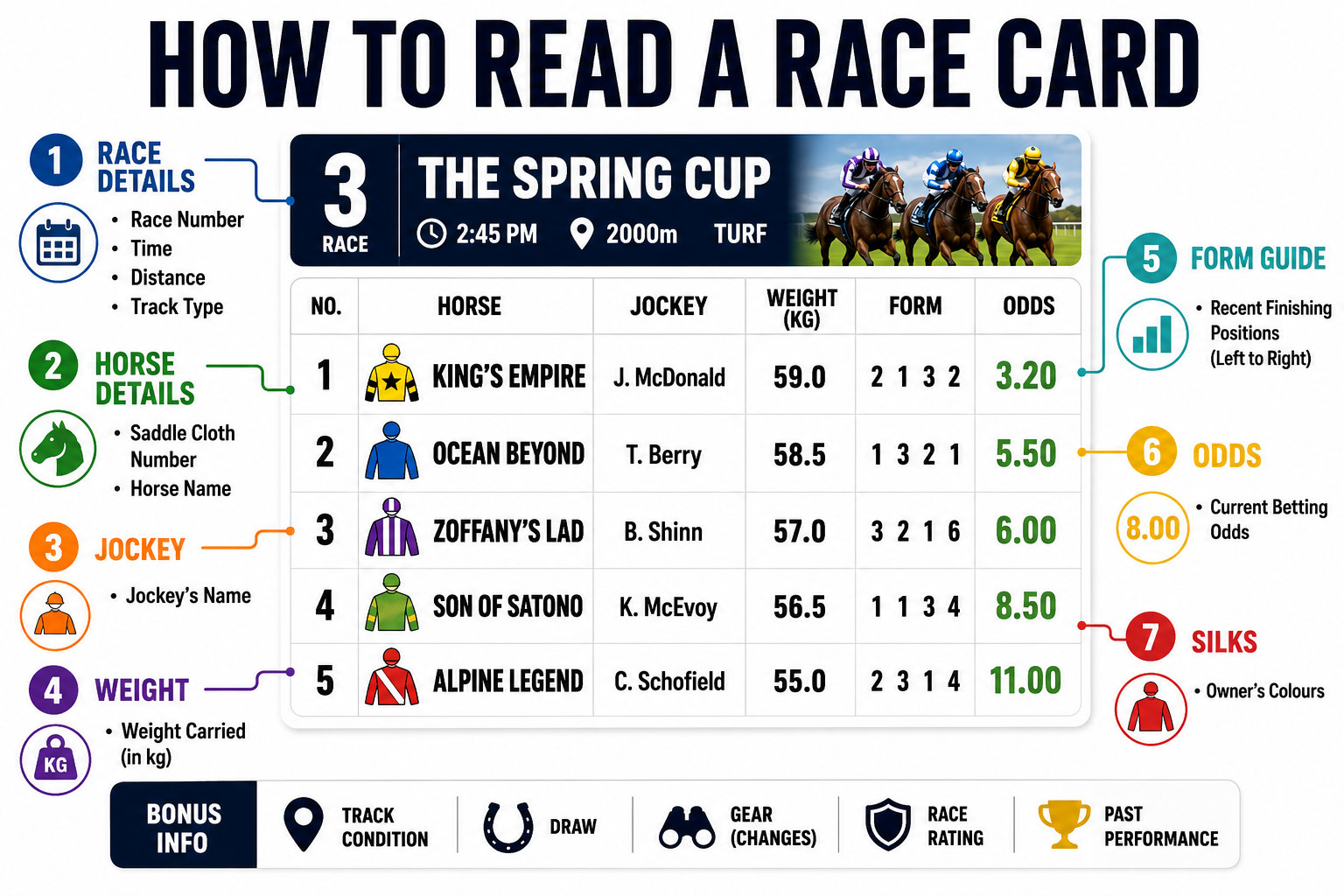
A race card presents essential details about every runner, including horse names, ratings, weights, jockeys, trainers, recent form, race class, and distance. Understanding these details helps enthusiasts interpret each race, compare competitors, and follow the event with greater confidence.
What Every Section of a Race Card Means
A race card is organised into sections that provide key information before a race begins. Understanding each one allows enthusiasts to assess the field and follow the competition more effectively.
- Race Number, Distance, Class, and Prize Money. The race number identifies the event within the day’s schedule, while the distance indicates how far the horses will run. Race class reflects the competition level, and prize money highlights the race’s significance, often attracting horses suited to that category and quality.
- Horse Rating, Weight, and Allowances: A horse’s official rating reflects its racing ability based on previous performances. Assigned weight is intended to create balanced competition, while allowances reduce the weight carried by eligible horses or jockeys under specific racing conditions, helping maintain fairness.
- Jockey and Trainer Statistics: Statistics provide insight into recent performance, consistency, and success rates. Reviewing these records helps enthusiasts understand how effectively a horse has been prepared and ridden, offering useful context before evaluating the overall race lineup.
- Form Figures Explained: Form figures represent a horse’s recent racing history using numbers and recognised abbreviations. They indicate finishing positions and notable outcomes, allowing enthusiasts to quickly assess consistency, recent performances, and overall racing form before the horse enters its next race.
How Race Conditions and Class Levels Affect Your Reading
Understanding these essential race conditions helps readers interpret races more accurately. Here’s how each factor contributes to the overall competition.
- Indian horse racing generally follows a class system, with Class I featuring the highest-rated horses and Class V comprising runners with lower official ratings. Horses move between classes as their ratings change, ensuring they compete against rivals of similar ability and making races more balanced and competitive.
- Not every race follows the same format. Maiden races are reserved for horses yet to record their first victory, while Plate races are run under fixed race conditions. Handicap races assign different weights based on official ratings to promote fair competition, whereas Stakes races showcase higher-quality horses competing for greater prestige and prize money.
- Every horse performs differently depending on the distance of the race. Some are naturally suited to shorter sprints that reward early speed, while others excel over middle or longer distances where stamina becomes the deciding factor. Comparing a horse’s previous performances over similar distances provides valuable insight into its suitability for the race.
- The condition of the racing surface can significantly influence performance on race day. Weather, moisture, and track preparation affect how quickly or comfortably horses travel across the course. Some horses perform best on firmer ground, while others adapt better to softer conditions, making track reports an important factor when assessing a race.
Trackwork — How to Read and Use It
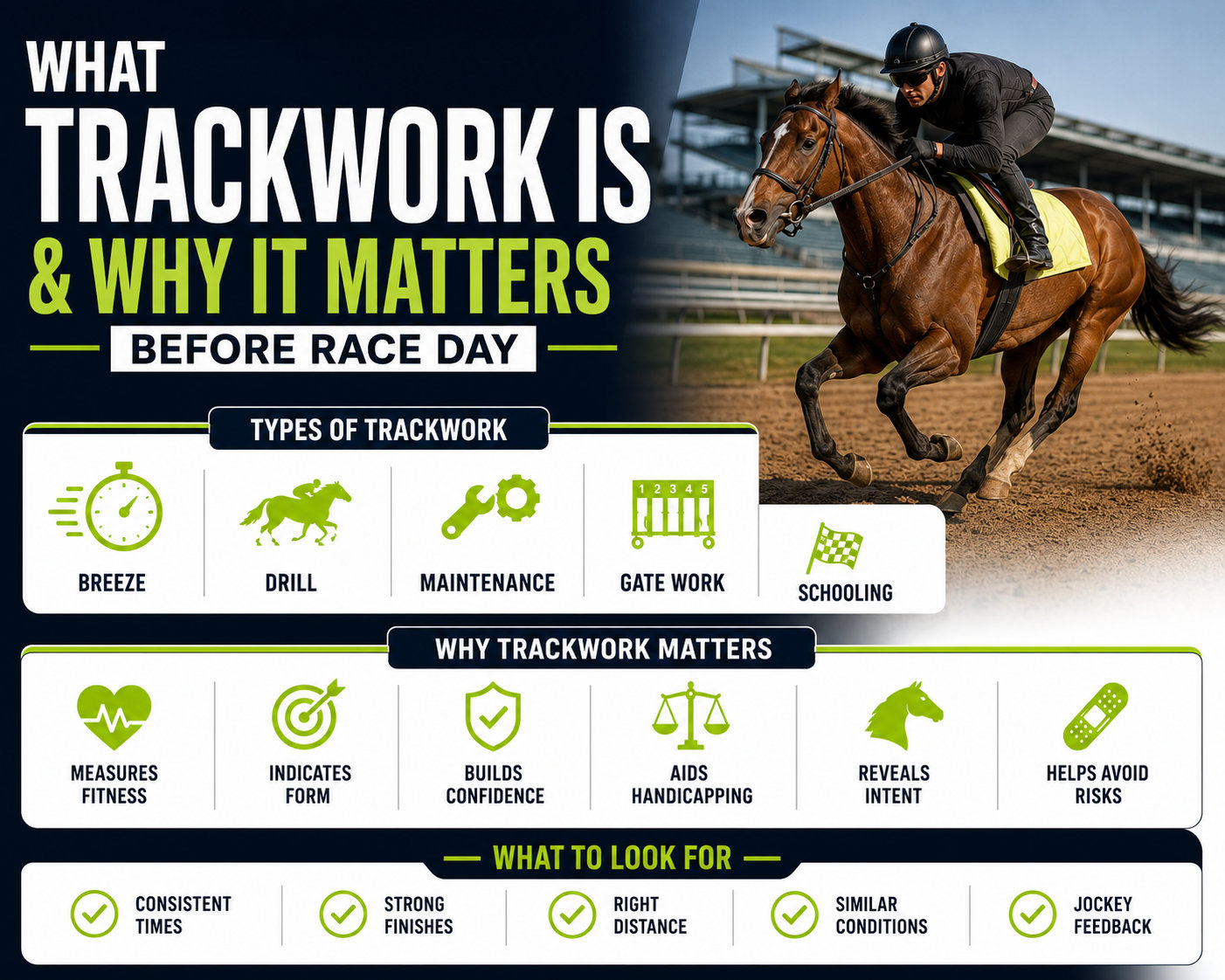
Trackwork provides insights into a horse’s preparation before race day through barrier trials, morning gallops, and workout reports. Understanding these sessions helps assess current form, fitness, race readiness, and overall performance potential before official competition.
What Trackwork Is and Why It Matters Before Race Day
Trackwork offers valuable insights into a horse’s condition before it competes, helping enthusiasts evaluate preparation beyond official race results. Morning gallops record how horses perform over specific distances, with workout times published to indicate current fitness and progress. Barrier trials simulate race conditions, allowing horses to gain experience, test readiness, or return from a break without affecting their official racing record. Comparing trackwork reports across runners in the same race helps identify horses with strong fitness, consistent preparation, and the potential to perform well when the starting gates open.
How to Use Trackwork Data Alongside Form and Race Cards
Each trackwork indicator offers valuable insight before race day. The table below explains what these signs may reveal about a horse’s readiness
| Trackwork Insight | What It Means |
|---|---|
| Trainer’s Preparation | Trainers use trackwork to prepare horses for upcoming races, and consistent training patterns often reflect a horse’s level of readiness. When viewed with recent form and race conditions, these sessions can provide useful insight into how a horse has been prepared. |
| Improving Workout Times | Faster or more consistent gallop times may indicate improving fitness, greater confidence, and positive progression in training. Comparing recent workouts with earlier sessions helps identify horses showing encouraging development before race day. |
| Signs of a Fresh Horse | Regular workouts, balanced training intensity, and steady preparation can suggest a horse is physically ready to compete. Assessing these factors alongside the race card and recent performances offers a more reliable picture of race-day readiness. |
| Limited or Light Trackwork | A horse completing fewer or lighter workouts is not necessarily underprepared. This may reflect a planned training approach, recovery after recent racing, or individual conditioning requirements, making it important to interpret trackwork within the horse’s overall racing context. |
Race Results — How to Read and Analyse Them
Race results provide more than finishing positions by summarising how each horse performed under specific race conditions. Learning to interpret these outcomes helps enthusiasts evaluate consistency, compare performances, and better understand a horse’s recent racing record.
How to Read Race Results Beyond Just the Winner’s Name
Race results contain valuable performance data that extends beyond the finishing order. Understanding each element helps explain how a race unfolded and provides deeper insight into every horse’s overall performance.
- Winning Margin, Timing, and Finishing Position: Winning margins show the gap between horses, official times reflect the race’s overall pace, and finishing positions reveal how each runner compared against the field, providing a clearer measure of performance than the winner’s name alone.
- Sectional Times: Sectional times divide the race into timed stages, highlighting where horses gained momentum or lost ground. They help assess running style, acceleration, and stamina, often revealing strengths that the overall finishing time cannot explain.
- Jockey and Trainer Performance: Results also reflect the effectiveness of jockey and trainer combinations across multiple races. Consistent performances can indicate successful preparation, strong partnerships, and reliable racing strategies that may continue in future competitions.
- Race Replays and Post-Race Reports: Replays and official reports explain incidents, tactical moves, and track influences that affected the outcome. Together, they provide important context, helping readers interpret performances more accurately than statistics alone.
How Results Build Into Form and Future Race Selections
Looking beyond individual results reveals trends that shape future race assessments. Here’s how different factors contribute to understanding a horse’s long-term form
Recent Results and Form Cycle
A sequence of recent results can reveal whether a horse is improving, maintaining consistent form, or experiencing a decline in performance. Looking at multiple races instead of a single finish provides a more accurate picture of its current racing condition.
Class Changes After a Race
Results often influence the class in which a horse competes next. Moving up a higher class usually reflects stronger recent performances, while dropping down to a lower class may place the horse against more suitable opposition based on its official rating.
Jockey Changes After a Result
A change of jockey can occur for various strategic reasons, including race conditions, availability, or a trainer’s preference. Comparing previous partnerships with current selections helps readers understand how changes in riding may influence a horse’s upcoming performance.
Building Form Profiles with Results Archives
Results archives allow readers to track a horse’s performances across different seasons, racecourses, distances, and competition levels. Studying this long-term record helps identify recurring strengths, preferred conditions, and performance patterns that are not obvious from recent results alone.
Compare recent race results, follow evolving form, and identify performance patterns that can strengthen your next race analysis.
Horse Racing Tips — How to Approach Selections
Horse racing tips are informed selections based on the analysis of race cards, recent form, trackwork, jockey and trainer combinations, race conditions, and other performance indicators. They should be used as a guide alongside your own research to build informed selections rather than being followed as guaranteed outcomes.
How Horse Racing Tips Work and What Goes Into a Selection
Horse racing tips are based on analysing multiple factors rather than relying on a single statistic or opinion. The table below explains the key elements that contribute to informed selections and how they should be interpreted together.
| Selection Factor | How It Contributes to a Racing Tip |
|---|---|
| Race Tips and Selections | A racing tip is an informed prediction based on evaluating the runners in a specific race. For Indian meetings, selections are developed by reviewing race cards, recent performances, trackwork, jockey and trainer records, and other relevant race-day information. |
| Form, Trackwork, Class, Weight, and Conditions | No single factor determines a selection. Recent form reflects consistency, trackwork indicates preparation, class measures the level of competition, assigned weight influences race balance, and track or weather conditions help assess whether a horse is suited to the day’s circumstances. |
| Odds and Market Movements | Markets can reflect changing expectations before a race as odds shorten or lengthen. While market movements may indicate confidence or shifting opinion, they should be considered alongside performance analysis rather than treated as the sole basis for a selection. |
| Responsible Use of Race Tips | Published tips are designed to support informed decision-making, not guarantee results. Comparing expert selections with your own analysis encourages a better understanding of racing and promotes a more responsible, balanced approach to making selections. |
How to Build Your Own Selection Method Alongside Published Tips
Published race tips can provide useful guidance, but developing your own selection method helps you understand why certain horses are chosen. Combining independent analysis with expert insights creates a more balanced approach and allows you to make informed decisions based on multiple performance factors.
Understanding Handicapping
Handicapping involves assessing each horse’s chances by considering official ratings, recent form, assigned weight, race class, and conditions. In Indian racing, comparing these factors helps identify runners that may be well placed for a competitive performance.
Comparing Ratings and Odds
Ratings indicate a horse’s assessed ability, while odds reflect market expectations before the race. Evaluating both together helps identify situations where a horse’s recent performances appear stronger than its current market position, offering potential value.
Using Speed Figures and Pace Analysis
Speed figures measure how quickly a horse has performed under previous race conditions, while pace analysis examines how a race is likely to unfold. Together, they help assess whether a horse’s running style suits the expected tempo.
Creating a Consistent Form Study Routine
A structured form study begins by reviewing recent race results, race cards, trackwork reports, and historical performances before considering published tips. Following the same evaluation process for every race helps build confidence, consistency, and a deeper understanding of racing analysis.
Horse Racing — Trainers, Jockeys, and Stables
Trainers, jockeys, and stables each play a distinct role in a horse’s racing career. Understanding their responsibilities helps explain how preparation, race-day decisions, and professional management collectively influence a horse’s performance and long-term development.
How Trainers and Jockeys Shape Race Outcomes
Trainers and jockeys play a significant role in a horse’s performance, making their records an important part of race analysis. A trainer prepares the horse through carefully planned conditioning, race placement, and training routines, while the jockey makes crucial tactical decisions during the race. Looking beyond individual names and considering their recent performances, partnerships, and current form provides a clearer understanding of how they may influence a horse’s chances on race day.
- A trainer’s strike rate and form help indicate how consistently a stable is performing. A series of strong recent results may suggest that horses from the same yard are arriving at races in good condition.
- Leading jockeys contribute through race judgement, positioning, pace management, and decision-making during different stages of a contest. Their experience can make a noticeable difference in closely contested races.
- Trainer-jockey partnerships often develop through repeated success, combining a trainer’s preparation with a jockey’s familiarity with the horse and racing strategy. Established partnerships can provide valuable insight when assessing a race.
- Following racing news and updates helps track the latest performances of trainers and jockeys, stable form, riding changes, and successful combinations. Reviewing these developments alongside race cards and form guides provides useful context before evaluating a race.
The History and Culture of Horse Racing
Horse racing has evolved through centuries of tradition, from its early development in Britain to the establishment of organised racing in India. Influenced by thoroughbred breeding, historic turf clubs, and prestigious racing traditions, the sport continues to combine heritage, competition, and structured governance worldwide.
How Horse Racing in India Evolved Over 250 Years
India’s horse racing history spans more than two centuries, with key events and institutions shaping its growth into a structured and nationally recognised sport.
The British Introduction of Horse Racing in 1777: Organised horse racing was introduced to India by the British in 1777, when structured race meetings began during the colonial period. Initially enjoyed by military officers and the British elite, the sport gradually expanded beyond social gatherings, laying the foundation for organised racing and the development of permanent racecourses across the country.
The Rise of the Royal Calcutta Turf Club, founded in 1847: One of India’s most influential racing institutions. It played a central role in standardising racing administration, promoting regulated competition, and preserving the traditions of thoroughbred racing, making it a cornerstone of organised horse racing in the country.
From Colonial Sport to National Racing Tradition: Over the years, horse racing expanded beyond its colonial origins as new turf clubs, racecourses, and racing centres were established across India. With organisations such as the Royal Western India Turf Club (RWITC) supporting modern governance and seasonal racing calendars, the sport evolved into a nationally recognised institution that continues to blend tradition with professional competition.
How Indian Horse Racing Is Regulated and Structured
Indian horse racing operates within a regulated framework designed to promote transparency, fairness, and responsible participation. At recognised turf clubs, the pari-mutuel system pools all selections before payouts are calculated from the total pool after authorised deductions. Official On-Course Centres provide designated facilities where racegoers can participate during race meetings in accordance with club regulations. Organisations such as the Royal Western India Turf Club (RWITC) and Royal Calcutta Turf Club (RCTC) establish and enforce rules governing race operations and participant conduct, while the Animal Welfare Board of India (AWBI) promotes the welfare of racehorses by encouraging appropriate standards of care and treatment.
How to Engage With Horse Racing as a Fan, Not Just a Bettor
The following experiences show how enthusiasts can enjoy horse racing while developing a deeper understanding of the sport and its traditions.
Visiting an Indian Turf Club
Visiting an Indian turf club offers a firsthand experience of the sport beyond the race itself. From watching horses in the parade ring and observing pre-race inspections to witnessing the excitement of live competition, visitors gain a deeper appreciation of the organisation, traditions, and atmosphere that define a race day.
Following Racing Coverage
Keeping up with race videos, live broadcasts, expert analysis, and social media updates helps enthusiasts stay connected throughout the racing season. Regular coverage provides insights into upcoming races, horse performances, industry developments, and interviews with trainers and jockeys, making it easier to follow the sport beyond race day.
Understanding Horse Ownership
Horse ownership offers an opportunity to become directly involved in the sport by supporting the training and racing of thoroughbreds. For those seeking a more accessible option, ownership syndicates allow multiple individuals to share costs, responsibilities, and the experience of following a horse throughout its racing career.
Building Racing Knowledge
Developing racing knowledge involves consistently studying race cards, trackwork reports, and official results to understand how different factors influence performance. Over time, recognising patterns in form, preparation, and race conditions helps enthusiasts interpret races with greater confidence and appreciate the sport from a broader perspective.
Conclusion
Now that you’ve explored the essentials of horse racing, staying informed and enjoying the sport becomes much simpler. At RaceBuzz, we are committed to bringing you trusted horse racing news, race cards, trackwork, results, expert insights, and comprehensive Indian and international coverage, helping you follow every race with greater confidence.
Frequently Asked Questions About Horse Racing
How long does a typical horse race last?
Most horse races last between one and three minutes, depending on the race distance, track conditions, and pace. Sprint races finish more quickly, while longer-distance events require greater stamina and usually take additional time.
What is a Thoroughbred horse, and why is it used for racing?
A Thoroughbred is a horse breed developed specifically for speed, stamina, and athleticism. Its bloodlines and performance characteristics make it the preferred breed for organised flat racing worldwide.
What happens if heavy rain affects a scheduled race meeting?
Officials inspect the course before racing. If conditions are unsafe, races may be delayed, rescheduled, or abandoned to protect horses, jockeys, and everyone involved.
What equipment can a racehorse wear during a race?
Racehorses may wear equipment such as blinkers, visors, tongue ties, or nosebands to improve focus, breathing, or control, depending on the trainer’s strategy and the horse’s individual needs.
Can trackwork reports predict the winner of a race?
No. Trackwork indicates a horse’s fitness and preparation, but cannot predict the outcome. It is most effective when considered alongside form, race conditions, and other performance indicators.