




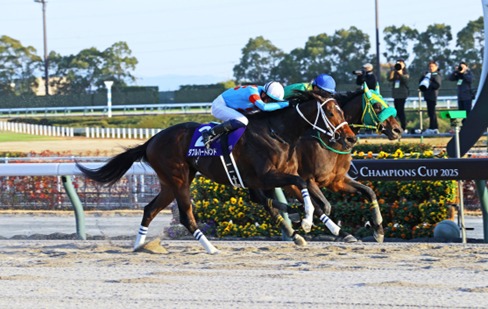
The March racing calendar in Japan gathers further momentum this weekend as a distinguished twelve-race programme is conducted at Hanshin Racecourse. Carefully structured by the Japan Racing Association, the fixture reflects a progressive rise in competitive depth and prize allocation throughout the afternoon. Developmental three-year-old contests form the early framework, while established open-age performers assume prominence later on. The meeting ultimately reaches its pinnacle in the Group 2 Tulip Sho over 1600 metres, the principal feature and the most prestigious engagement on the card.
Proceedings commence with RACE 1 at 09:55 over 1800 metres for a purse of 11,280,000 Yen, thereby setting a composed and competitive tone. The contest provides emerging three-year-olds with an early opportunity to demonstrate balance, stamina, and tactical discipline. RACE 2 follows at 10:25 across 1400 metres, again for 11,280,000 Yen, consequently introducing sharper emphasis on early pace and positional efficiency. The reduced trip demands decisive execution from the gates and sustained acceleration in the concluding stages.
At 10:55, RACE 3 extends the examination to 2000 metres with prize money maintained at 11,280,000 Yen. This middle-distance assignment places measured energy distribution at the forefront, rewarding runners capable of controlled tempo management. The competitive standard elevates with RACE 4 at 11:25 over 1800 metres, offering an increased purse of 15,620,000 Yen. The enhanced allocation reflects deeper field quality and encourages more assertive late-race tactics.
RACE 5 at 12:15 continues over 2000 metres for 11,280,000 Yen, reinforcing the stamina-oriented framework of the programme. In succession, RACE 6 at 12:45 replicates the same distance and prize value of 15,620,000 Yen thereby enabling consistent comparative assessment within the division.
Attention then shifts to open-age competition as RACE 7 is staged at 13:15 over 1200 metres for 15,620,000 Yen. This sprint engagement highlights the importance of experience, race positioning, and sharp finishing speed. RACE 8 at 13:45 over 1800 metres, carrying identical prize value that restores equilibrium between pace and endurance. The contest is likely to reward patience before decisive late acceleration.
The staying test intensifies in RACE 9 – Sanyo Tokubetsu at 14:15 over 2200 metres with prize money of 30,410,000 Yen. The extended journey demands composure and tactical intelligence, particularly in the final stages where stamina reserves are fully examined.
RACE 10 – Itami Stakes follows at 14:50 over 1800 metres with a substantial purse of 36,020,000 Yen. Positioned prominently within the afternoon structure, it represents a high-quality middle-distance showcase for proven performers.
The feature attraction, RACE 11 – The Tulip Sho (G2), is conducted at 15:30 over 1600 metres for total prize money of 100,500,000 Yen. As a significant early March benchmark for three-year-old fillies, it consistently identifies emerging class and shapes the trajectory of the spring racing season.
The concluding event, RACE 12 at 16:10 over 1200 metres for 22,690,000 Yen concludes the meeting, returning the spotlight to speed and precision to close the programme in measured fashion.
Across the Hanshin Race Cards 1 March, the alignment of developmental assignments and established open-age contests ensures a progressive balance of distance, quality, and prize scale, reinforcing the importance of this March meeting within the broader Japanese racing season.
For more stories, results, and updates from the world of horse racing, stay tuned to RaceBuzz