




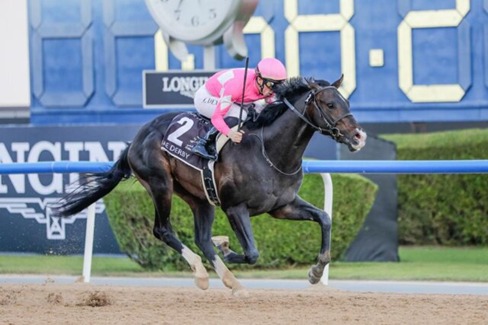
A full and distinguished field of three-year-old Thoroughbreds will assemble for the Grade I Kentucky Derby presented by Woodford Reserve, scheduled to be contested on Saturday, 2 May over 1¼ miles on dirt at Churchill Downs. The $5,000,000 feature will once again stand as a defining test of stamina, balance, and racing maturity, bringing together a wide-ranging and internationally influenced lineup comprising leading trainers, accomplished jockeys, and prominent ownership operations in one of the most established contests in the global racing calendar.
The race will be run at 6:57 PM ET and will feature 20 declared runners, ensuring a deep, competitive, and tactically layered contest. Renowned trainers including Todd A. Pletcher, Bob Baffert, Brad H. Cox, and William I. Mott will field multiple contenders, each arriving with carefully managed preparations through graded stakes routes and preparatory trials. The composition of the field reflects a season-long build-up of form lines, where consistency, adaptability, and progression have defined qualification.
Renegade will break from stall one under Irad Ortiz Jr for Todd Pletcher, carrying strong expectations from an inside draw that may allow an economical trip. Albus will follow with Manuel Franco aboard for Riley Mott, positioned to track the early tempo, while Intrepido will line up under Hector Berrios, completing an opening trio that could influence the early rhythm of the contest if settling efficiently into stride.
Litmus Test, trained by Bob Baffert, will hold an inner position alongside Right To Party and Commandment. This cluster of runners is expected to establish early presence near the pace, where positioning through the opening furlongs will be critical in conserving energy for the demanding final stages. Tactical discipline in this section of the race may prove decisive once the field begins to compress.
Danon Bourbon and Wonder Dean will represent Japanese-trained interests, adding an international dimension and a contrasting style often characterised by sustained late acceleration. So Happy and The Puma will occupy mid-field positions, both bringing profiles built on steady progression and the ability to adapt to varying race scenarios depending on early tempo development.
Further out in the line-up, Emerging Market, Pavlovian, and Six Speed will be tasked with navigating from wider berths while maintaining contact with the main pack. Their effectiveness will largely depend on early positional judgement and the ability to avoid excessive ground loss around the initial bend. Further Ado and Golden Tempo will also be positioned among the later draws, where race awareness and timing of forward moves will be crucial as the field transitions into its middle stages.
At the outermost positions, Great White, Ocelli, Incredibolt, Chief Wallabee and Potente will face a more demanding tactical assignment from the start. Wide draws in a field of this size traditionally require a blend of early acceleration and calculated restraint, particularly as runners seek optimal positioning before the pace stabilises down the back straight.
The Kentucky Derby Race Cards 2 May will present a comprehensive and deeply competitive field, blending established performers with emerging prospects from leading international and domestic stables. The extended field size, combined with the classic 1¼-mile distance, will place strong emphasis on stamina conservation, positional awareness, and the ability to respond effectively to shifting pace dynamics throughout the race.
With multiple entries from elite training operations and a strong global representation across the field, the contest will be shaped by tactical execution, sectional timing, and sustained finishing strength. Experienced jockeys across the lineup will be required to balance patience with decisive positioning, particularly as the race enters its final turning phase and straight-line drive. The tempo is expected to play a central role in determining how the race unfolds in the closing stages.
Ultimately, the historic prestige of the event continues to reinforce its standing as the premier classic examination for the American three-year-old division, where preparation, adaptability, and composure under pressure converge on one of racing’s most iconic stages.
For more stories, results, and updates from the world of horse racing, stay tuned to RaceBuzz