




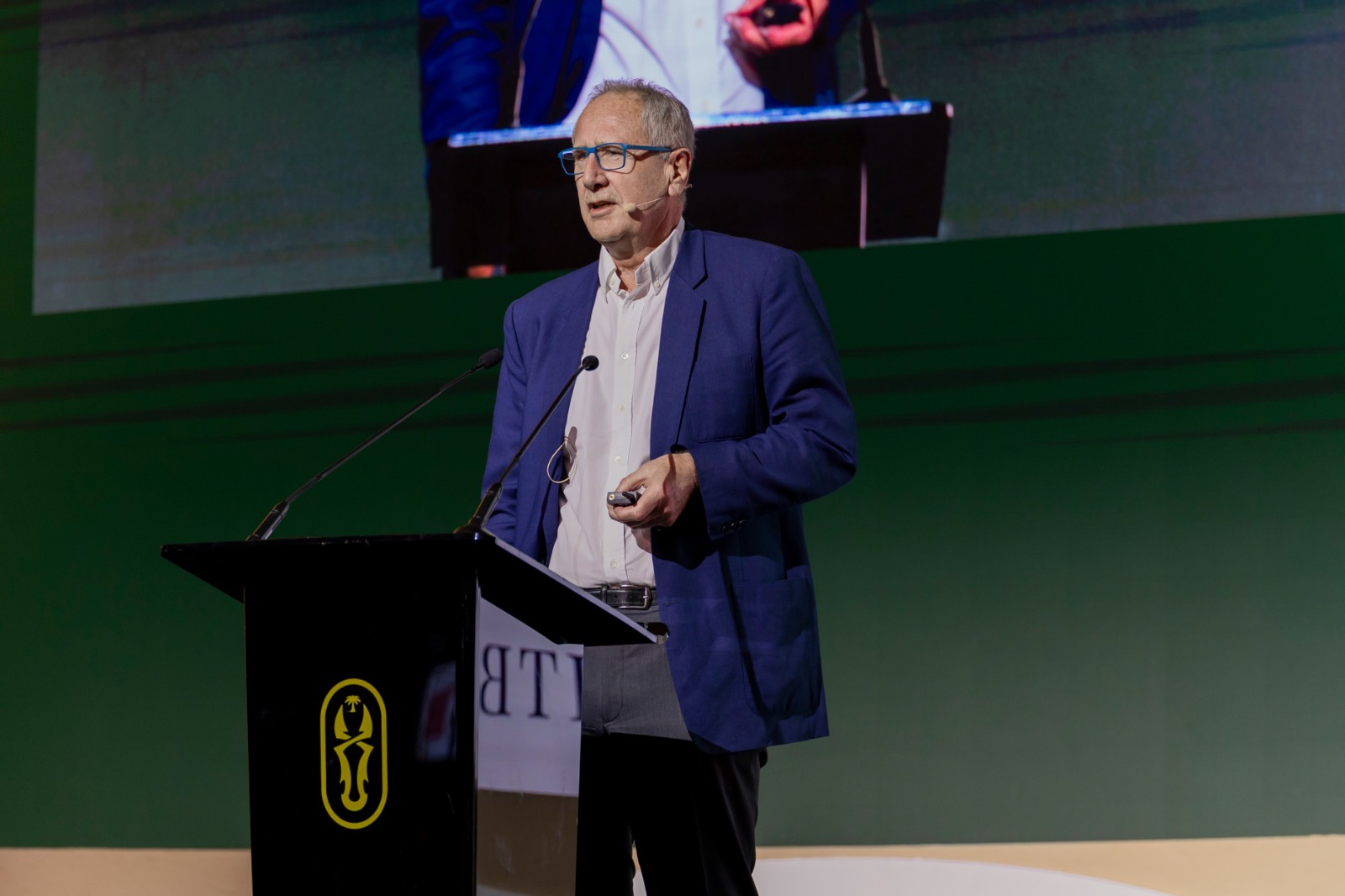
The Asian Racing Conference was told on Thursday that the long-term health of horse racing depends on its ability to connect meaningfully with younger generations, both as fans and as future professionals within the sport.
Addressing delegates at the Crowne Plaza Riyadh RDC Hotel and Convention Centre in Riyadh, Saudi Arabia, Mr Andrew Harding, Secretary General of the Asian Racing Federation and Executive Director of Racing at The Hong Kong Jockey Club (HKJC), delivered a pointed message during a session titled ‘The Future Sustainability of Racing and Breeding’.
“Our sport goes back more than centuries,” Mr Harding said, “but in terms of its future, this will depend on its relevance to youth. Beyond their participation as fans, there is the question of their participation in the workforce.”
Asian Racing Conference spotlights youth engagement
Mr Harding stressed that attracting young people is not simply a matter of expanding the audience base. It is fundamental to maintaining a skilled and passionate workforce capable of safeguarding equine welfare standards. Without committed young professionals entering the industry, he warned, racing’s sustainability could be compromised.
He underlined that welfare is inseparable from workforce development. The care of racehorses, he noted, depends on knowledgeable and dedicated individuals who see the sport as a long-term vocation rather than a passing interest.
His comments set the tone for broader discussions at the Asian Racing Conference, where sustainability emerged as a central theme across multiple panels.
Mr Philip Newton, Chair of the Thoroughbred Breeders’ Association, highlighted the global nature of racing’s challenges. With horses regularly moving between jurisdictions, he said, the industry’s issues require coordinated international solutions.
Newton drew attention to a one-third reduction in worldwide foal crops, describing it as a significant sustainability concern. “Because the foal crop is falling, the size of the herd is falling, and then opportunity is falling,” he explained. “The ability to invest in stallions disappears.”
He cautioned against relying solely on domestic markets. “Any product that is launched today must have global appeal. To rely upon a domestic market is a high-risk strategy and it is bound to fail,” he said, noting that younger generations rank welfare among their principal concerns when evaluating the sport.
Yet Newton also pointed to evidence of strong global interest in elite international racing, suggesting there remains a platform upon which the sport can build — provided it maintains public confidence.
“If breeders are to thrive, we must work collectively across jurisdictions, particularly on issues such as welfare, traceability and sustainability. Public confidence is no longer optional, it is essential,” he added.
The panel featured a cross-section of international voices, including representatives from Saudi Arabia, Australia, Japan and the United States, reflecting the collaborative tone of the Asian Racing Conference.
Among them was Japanese bloodstock agent Mr Yukio Shimokobe, who emphasised the value of long-term planning. “Sustainable success does not come from short-term trends, but from consistent policy, education and respect for the horse,” he said, citing Japan’s decades-long investment in broodmare quality and horsemanship.
In a separate session titled ‘Equine Welfare’, experts examined aftercare initiatives and technological advances aimed at enhancing equine safety. Dr Chris Riggs, Director of the HKJC Equine Welfare Research Foundation, discussed injury prevention and emerging research into genetic markers associated with fracture risk.
“We now recognise that there are certain genes associated with an increased risk to fractures,” Dr Riggs said, while cautioning that reducing injury rates remains complex.
He also called for stronger industry-wide collaboration, referencing efforts supported by the International Federation of Horseracing Authorities to unify research and welfare initiatives across borders.
Panellists further highlighted the growing role of the International Forum for the Aftercare of Racehorses, which over the past decade has helped standardise and professionalise aftercare practices worldwide.
Mr Eliot Forbes, Chief Executive of New Zealand’s Racing Integrity Board, said IFAR had made aftercare more visible and structured. “Most jurisdictions have not only acknowledged the importance of aftercare, but they’ve acted and delivered,” he noted.
Across sessions, the message of the Asian Racing Conference was clear: the sport’s heritage may be centuries old, but its future will be shaped by how effectively it adapts — embracing youth engagement, strengthening welfare standards and committing to global cooperation.
For more stories, results, and updates from the world of horse racing, stay tuned to Racebuzz.